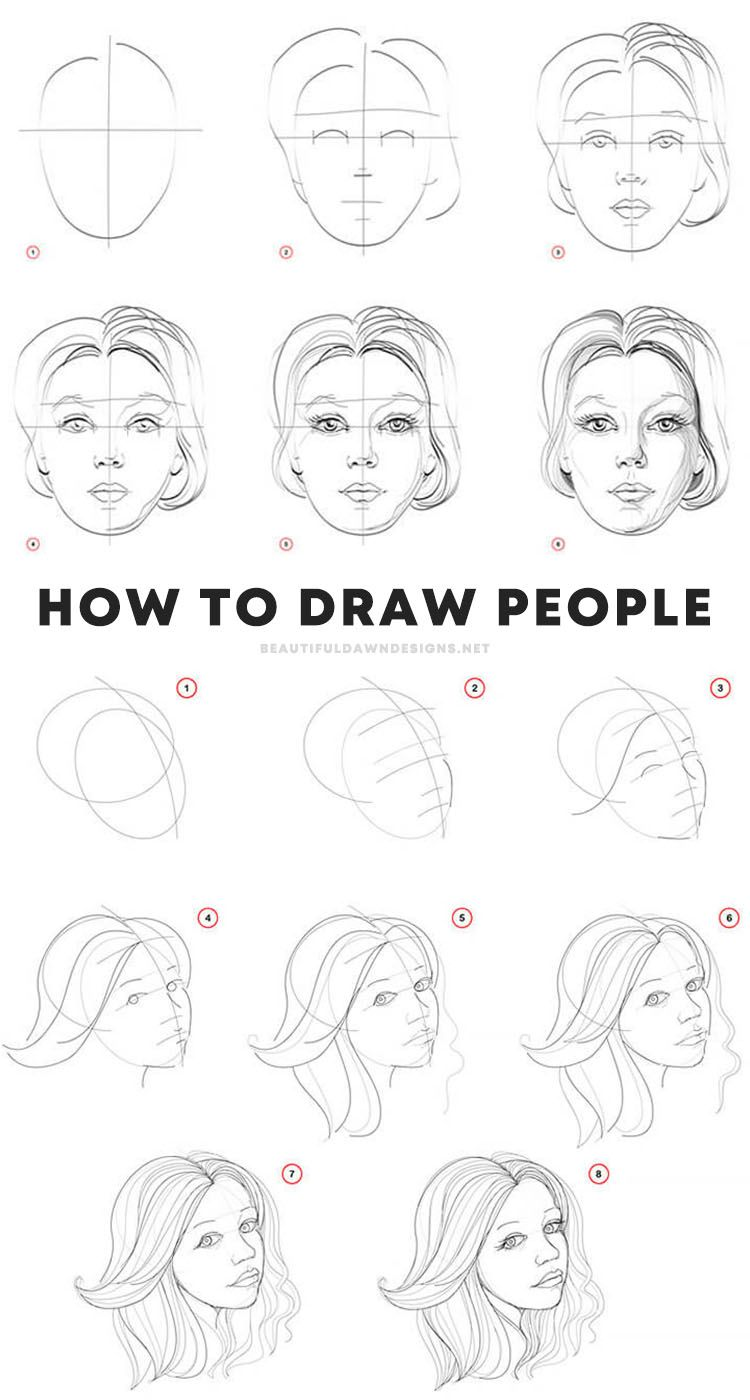
Drawing people is one of the most exciting skills you can learn. Many people think you need to be a born artist to create realistic figures. That is not true! With a little practice and the right steps, anyone can learn how to draw people. Whether you want to sketch your friends or create cool characters, the secret lies in breaking complex shapes into simple parts. Think of it like building with blocks. By focusing on basic forms like circles, ovals, and lines, you will gain the confidence to capture the human form on paper. Let’s start this creative journey together and have some fun with our pencils.
Start with a Simple Stick Figure
When learning how to draw people, it is best to start with a basic stick figure. A stick figure helps you understand the skeleton and how the body moves in space. You do not need perfect anatomy right away. Just draw a circle for the head and simple lines for the spine, arms, and legs. This technique acts as a blueprint for your entire drawing. By practicing these simple lines, you will learn the proportions of the body before you add any detail. Keep your lines light so you can erase them later as you build your final character.
Focus on Proper Head Proportions
The head is the most important part when you learn how to draw people. A good tip is to draw an oval shape and divide it into sections. Usually, the eyes sit right in the middle of the head. The nose goes halfway between the eyes and the chin. Knowing these measurements makes a huge difference in your sketches. If you get the proportions right early, the rest of the body will look much more natural. Practice drawing different oval shapes and marking these points. This exercise will help you develop a keen eye for facial structure and symmetry.
Master the Basic Shapes of the Torso
To make your figures look solid, you must move beyond thin lines. Think of the torso as two simple shapes: a trapezoid for the chest and a smaller one for the hips. When you learn how to draw people, these shapes represent the core of the body. They provide a base to hang your limbs onto. Try drawing these shapes at different angles to show movement. If the chest is tilted, the person looks like they are walking or leaning. Using these geometric forms is a professional trick that makes your sketches look balanced, sturdy, and well-proportioned from the very first stroke.
Adding Volume to Your Arms and Legs
Now that you have a torso, it is time to add some thickness to the limbs. Use cylinders to represent the arms and legs. When you study how to draw people, cylinders are perfect because they show depth. The upper arm and forearm are two separate cylinders connected at the elbow joint. You can make them look thick or thin depending on the character you want to create. Remember, joints like knees and elbows are like small circles. They help your drawing look flexible and alive. Once you master cylinders, your drawings will stop looking flat and start feeling three-dimensional.
Connect the Joints for Natural Movement
A human body is rarely perfectly straight. To make your art look human, you need to show movement. When practicing how to draw people, think about where the body bends. The neck connects the head, the shoulders connect the arms, and the hips connect the legs. Try drawing your character doing something active, like running or jumping. If you follow the flow of the spine, your character will look natural rather than stiff. This is where your personal style begins to shine. Even a simple lean to one side adds a lot of personality to your finished sketch.
Drawing the Hands and Feet Simply
Many beginners fear drawing hands and feet, but they do not have to be scary. When learning how to draw people, treat hands like mittens first. You do not need to draw every finger immediately. Start with a square or a wedge shape for the palm, then add simple lines for the fingers. For feet, imagine a small triangular wedge shape. Once you are comfortable with these basic shapes, you can add more detail later. Remember, even famous artists simplify hands and feet when they are just starting a sketch. Keep it simple and focus on the overall shape.
Using Reference Photos for Better Accuracy
One of the best ways to improve is by looking at real life. If you want to master how to draw people, grab a magazine or look at photos online. Study how the light hits a person’s face or how their clothes fold when they sit down. You do not have to copy the photo exactly. Just look for the basic shapes we talked about earlier. Using references is not cheating; it is a tool that every professional artist uses to stay sharp. Over time, your brain will memorize these details, and you will be able to draw from your own imagination.
Refining Your Lines and Adding Details
Once your basic skeleton is done, it is time to refine your work. This is when you turn your rough sketch into a clear drawing. When you learn how to draw people, take a darker pencil and trace over your best lines. You can now add details like hair, clothing, and facial expressions. Don’t worry about being perfect. Every artist makes mistakes, and that is what the eraser is for! Adding details is the most fun part of the process. It allows you to transform a simple geometric skeleton into a unique character with its own story and style.
Practice Shading for a 3D Look
Shading is the magic step that makes a drawing pop off the page. To really understand how to draw people, you must identify where the light is coming from. If the light is on the left, the shadows should be on the right side of the body. Use light pencil strokes to create soft shadows under the chin, arms, and legs. This creates contrast and depth. You do not need to be an expert to shade well. Just observe how shadows work in real life and try to copy what you see. It will give your art a professional, polished finish.
Keep a Daily Sketchbook Routine
Consistency is the most important part of getting better at art. Try to draw for at least ten minutes every single day. If you want to know how to draw people quickly, a sketchbook is your best friend. Draw people you see at the park, at school, or on television. Do not worry if your first few drawings look a bit messy. The goal is to get comfortable with the pencil in your hand. Each page you fill helps you get better. Your progress will surprise you if you just keep showing up and drawing every day.
How to Stay Motivated When You Get Stuck
Every artist hits a wall sometimes, and that is perfectly okay. When you feel frustrated while learning how to draw people, take a break. Walk away from your desk, stretch, and come back with fresh eyes. Maybe try drawing something totally different for a while, like an animal or a tree. Remember that learning to draw is a marathon, not a sprint. Celebrate the small wins, like drawing a hand that actually looks like a hand. Your persistence is the most important trait you have, so keep going and stay positive.
Frequently Asked Questions
1. Is it hard to learn how to draw people?
It takes practice, but it is not hard if you break it down into simple shapes like circles and lines.
2. What tools do I need to start?
You only need a simple pencil, an eraser, and a plain sheet of paper to begin your journey.
3. Should I start with the face or the body?
Most artists find it easier to start with the full body’s proportions before focusing on face details.
4. How long does it take to get good?
Everyone is different, but if you practice daily, you will see real improvement in just a few weeks.
5. Can I draw people without a model?
Yes! Once you learn the basic shapes and proportions, you can draw from your own imagination easily.
6. Where can I find more tips on how to draw people?
You can look at art books, watch online tutorials, or just observe people in your daily life.
Conclusion
Learning how to draw people is a rewarding skill that opens up a world of creativity. By using basic shapes, practicing daily, and being patient with yourself, you will soon be creating amazing sketches. Remember, even the best artists started exactly where you are today. Keep your pencils sharp and your sketchbook ready. Why not start your first person-drawing right now? Grab a pencil, pick a pose, and see what you can create. I would love to hear how your first attempt went—feel free to share your progress or ask any questions in the comments below!
Leave a Reply