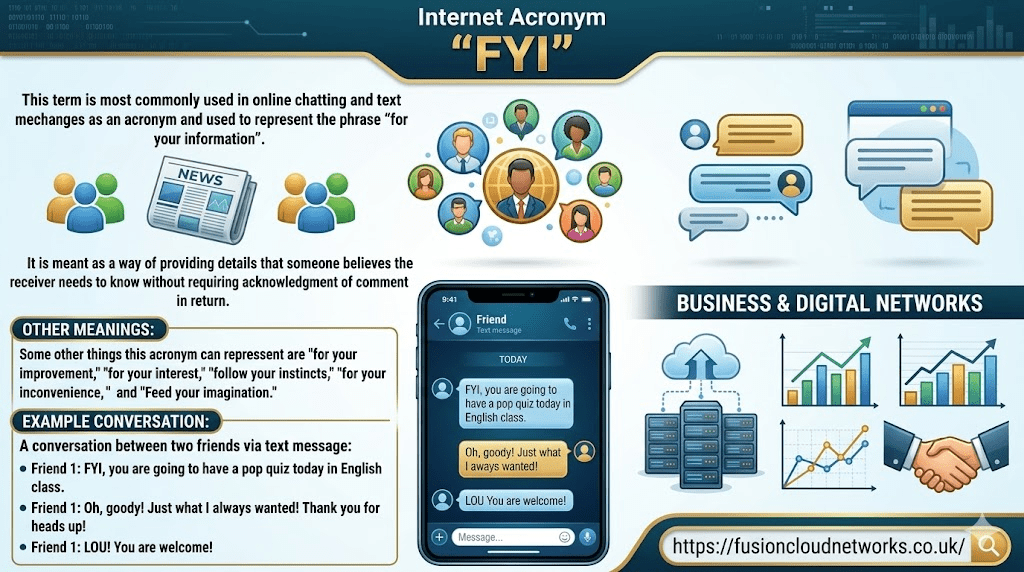
Email communication is a big part of work, school, and business today. If you often receive emails, you have probably seen the term FYI in the subject line or message body. Many people understand it generally, but they may not know the exact fyi meaning in mail or when it should be used.
The abbreviation FYI is common in professional communication because it helps people share information quickly. It saves time and lets recipients know that the email is mainly for awareness rather than immediate action. Understanding the fyi meaning in mail can help you communicate more clearly and avoid misunderstandings in the workplace.
In this guide, you will learn what FYI means, why people use it, when to use it, examples, benefits, email etiquette tips, and common mistakes to avoid.
Quick Overview of FYI Meaning in Mail
| Term | Meaning |
| FYI | For Your Information |
| Purpose | To share information |
| Response Required | Usually No |
| Common Usage | Emails, messages, workplace communication |
| Tone | Professional and informative |
| Best For | Updates, announcements, references, reports |
| Avoid When | Immediate action is needed |
What Does FYI Mean in Mail?
The fyi meaning in mail is “For Your Information.” It is an abbreviation used to tell someone that the information being shared is important for their awareness but usually does not require any action.
When a sender includes FYI in an email, they are often providing updates, reports, announcements, or background information. The recipient can read the information and stay informed without feeling pressured to reply immediately.
For example:
Subject: FYI: New Office Security Policy
This tells employees that the email contains information they should know, even if no response is required.
The term has become a standard part of business communication and is recognized worldwide.
Why Is FYI Used in Emails?
People use FYI because it makes communication more efficient. Instead of writing a long explanation about why an email is being sent, the sender can simply include FYI.
In professional environments, employees receive dozens of emails daily. Adding FYI helps recipients quickly understand the purpose of the message.
Some common reasons include:
- Sharing updates
- Sending reports
- Providing project information
- Informing team members
- Forwarding useful details
- Keeping stakeholders updated
Knowing the fyi meaning in mail helps people prioritize emails and manage their inbox more effectively.
When Should You Use FYI in Mail?
FYI should be used when the recipient needs information but does not need to take immediate action.
Examples include:
- Company announcements
- Meeting summaries
- Policy changes
- Project updates
- Industry news
- Team notifications
For instance:
“FYI, the client approved the proposal yesterday.”
This statement informs team members without asking them to do anything right away.
Using FYI properly can make workplace communication more organized and professional.
When Should You Not Use FYI?
Although FYI is useful, there are situations where it should be avoided.
Do not use FYI if:
- Immediate action is required
- Deadlines must be met
- Decisions are needed
- Urgent responses are expected
For example:
❌ “FYI, please submit the report today.”
This is confusing because it contains an action request.
A better option would be:
✅ “Action Required: Submit the report by 5 PM today.”
Understanding the proper fyi meaning in mail helps prevent communication mistakes.
FYI in Email Subject Lines
One of the most common places to use FYI is in the email subject line.
Examples:
- FYI: Updated Marketing Strategy
- FYI: Meeting Notes from Today’s Discussion
- FYI: New Employee Benefits
- FYI: Quarterly Sales Report
Subject lines containing FYI immediately tell readers that the email is informational.
This simple practice improves email organization and saves time for everyone involved.
Examples of FYI in Professional Emails
Here are some workplace examples:
Example 1
Subject: FYI: Client Feedback
Hello Team,
FYI, the client shared positive feedback about our recent project. They were especially pleased with the response time and communication.
Best Regards
Example 2
Subject: FYI: Office Maintenance Schedule
Hello Everyone,
FYI, building maintenance will occur on Friday from 9 AM to 12 PM. Some areas may have limited access during this time.
Thank you.
These examples show the practical fyi meaning in mail within everyday business communication.
Benefits of Using FYI in Emails
Using FYI correctly offers several advantages.
Saves Time
Recipients instantly understand the purpose of the message.
Reduces Confusion
People know whether action is required.
Improves Communication
Information flows more smoothly among teams.
Creates Transparency
Everyone stays informed about important developments.
Supports Team Collaboration
Employees can remain updated on projects and decisions.
These benefits explain why FYI remains one of the most common email abbreviations today.
FYI Email Etiquette Best Practices
Good email etiquette is important when using FYI.
Be Clear
Provide enough context so readers understand why the information matters.
Stay Professional
Use a respectful tone, especially in workplace emails.
Avoid Overusing FYI
Too many FYI emails can overwhelm recipients.
Use Descriptive Subject Lines
Combine FYI with a clear topic description.
Consider Your Audience
Ensure the information is relevant to the people receiving it.
Following these guidelines helps maintain effective communication.
FYI vs Action Required Emails
Many people confuse FYI emails with action emails.
| FYI Email | Action Required Email |
| Informational | Requires action |
| Usually no reply needed | Response expected |
| Shares updates | Requests completion of tasks |
| Low urgency | Higher urgency |
| Awareness-focused | Task-focused |
Understanding this difference is essential when learning the fyi meaning in mail.
Common Mistakes When Using FYI
Many professionals misuse FYI without realizing it.
Using FYI for Urgent Requests
FYI should not replace urgent instructions.
Sending Irrelevant Information
Only include people who genuinely need the information.
Providing No Context
Readers should understand why the email matters.
Overloading Email Threads
Too many FYI messages can reduce effectiveness.
Avoiding these mistakes improves communication quality.
Is FYI Professional in Business Communication?
Yes, FYI is widely accepted in professional communication.
It appears regularly in:
- Corporate emails
- Internal communications
- Project management updates
- Business reports
- Team announcements
However, professionalism depends on how it is used. The message should remain clear, respectful, and relevant.
In my experience working with workplace communication systems, FYI works best when paired with a concise explanation. This approach keeps recipients informed without creating unnecessary email traffic.
Alternative Phrases to FYI
Sometimes you may want to use different wording.
Common alternatives include:
| Alternative Phrase | Meaning |
| For Your Reference | Additional information |
| Just So You Know | Informal update |
| For Awareness | Informational notice |
| Please Note | Important information |
| For Your Review | Information requiring review |
| Keeping You Updated | Status update |
These alternatives can add variety to your professional emails.
How FYI Improves Workplace Communication
The fyi meaning in mail goes beyond a simple abbreviation. It helps teams stay informed without overwhelming people with unnecessary tasks.
Organizations that communicate clearly often experience better collaboration, faster decision-making, and fewer misunderstandings. FYI emails contribute to this by separating informational messages from action-based requests.
When employees understand the purpose of an email immediately, they can prioritize their work more effectively and focus on what matters most.
Frequently Asked Questions (FAQs)
1. What is the full form of FYI in email?
FYI stands for “For Your Information.”
2. What is the FYI meaning in mail?
The FYI meaning in mail is that the sender is sharing information for awareness and usually does not require a response.
3. Is FYI professional?
Yes. FYI is commonly used in business and workplace communication.
4. Should I reply to an FYI email?
Usually, no reply is needed unless the sender specifically requests feedback or confirmation.
5. Can FYI be used in the email subject line?
Yes. It is often used in subject lines to indicate informational content.
6. What is the difference between FYI and Action Required?
FYI emails provide information, while Action Required emails ask recipients to complete a task or respond.
Conclusion
Understanding the fyi meaning in mail is essential for effective email communication. FYI stands for “For Your Information” and is used to share updates, announcements, reports, and other informational content without requiring immediate action. When used correctly, it saves time, improves clarity, and helps teams stay informed.
Whether you are a student, employee, manager, or business owner, mastering the proper use of FYI can make your emails more professional and easier to understand. Use FYI thoughtfully, provide clear context, and ensure the information is relevant to your audience. Doing so will strengthen your communication skills and help create a more organized and productive workplace.
Leave a Reply